Experts confirm planet is successfully diversifying its catastrophe portfolio
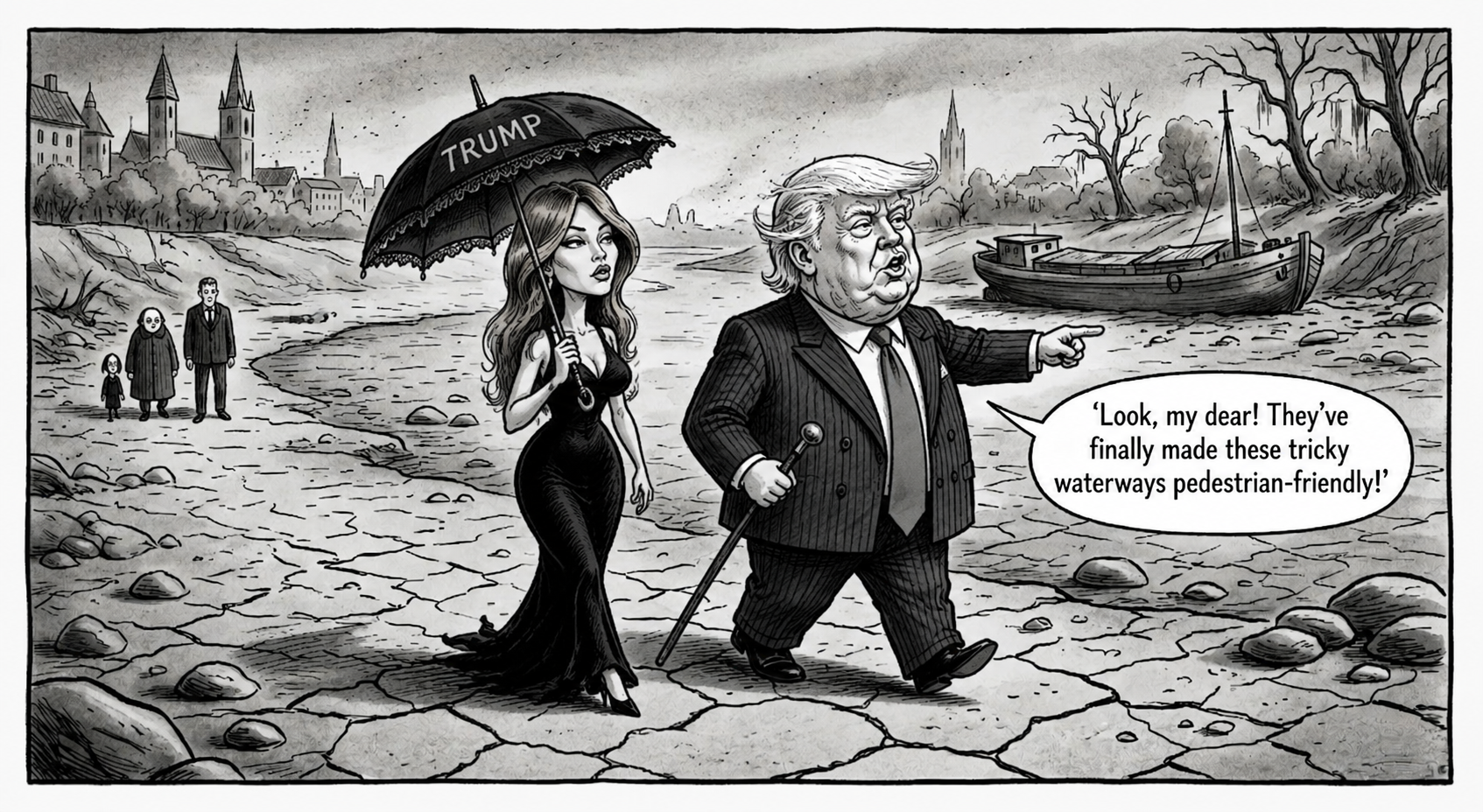
Humanity received another encouraging quarterly update from Planet Earth this week, as scientists announced that climate change has continued its aggressive expansion into several promising new markets, including record heat, reservoir mud, crop failure, methane emissions, and mysteriously undersized British wasps. Climate change used to be mostly known for warming the planet. But today it offers a fully integrated ecosystem of cascading consequences.
The latest success came in August 2026, which Copernicus says was the warmest August in its ERA5 record and essentially tied July 2023 as the warmest month ever recorded globally. The global average temperature was 1.65°C above the estimated 1850–1900 average, while June through August tied 2024 as the warmest boreal summer on record. Western Europe, meanwhile, experienced its warmest summer in the ERA5 record.

Scientists Baffled As August Continues Reckless Campaign To Become More August Than August
Scientists say human-caused global heating remains the underlying driver, with a rapidly strengthening El Niño now piling additional warmth on top. Ocean temperatures outside the polar regions also hit an August record, and Copernicus says El Niño conditions could strengthen further into 2027.
For readers who find the science confusing, experts have prepared this handy explanation:
Carbon dioxide + El Niño + several decades of ignoring scientists = weather app begins displaying numbers that look like oven settings.
Climate skeptics immediately noted that Earth has always had August.
Checkmate, climatologists.
America’s Reservoirs Discover Innovative New Water Substitute: Dirt
Climate change is also bringing exciting innovations to the American water system, where reservoirs are gradually filling with sediment. A recent Nature Communications study estimated that U.S. reservoirs had collectively lost about 7.7% of their designed storage capacity to sediment by 2025, with more than two-fifths of the reservoirs studied losing over a quarter of their original capacity.
Meanwhile, recent reporting describes a nasty feedback mechanism: drought and wildfire remove vegetation that holds soil in place, then intense rainfall carries dirt, ash and debris into reservoirs, reducing the space available for the thing reservoirs traditionally stored, which experts call “water.” This is especially inconvenient because drought also increases the need to store water.
Fortunately, America has tens of thousands of reservoirs, so there should be plenty of places to store all the sediment.
Darfur Farmers Asked To Kindly Produce Food Despite War And Rain Forgetting To Arrive
In Darfur, farmers across several areas reported severe rainfall shortages damaging crops and raising fears of an approaching food crisis. Radio Tamazuj reported farmers describing poor harvest prospects on top of the region’s existing war and economic hardship. Researchers caution against automatically attributing every individual drought to climate change without analysis.
Which is reassuring because “war + crop failure + inadequate rain” was beginning to sound unnecessarily pessimistic.
Regional officials have therefore been encouraged to examine the situation using humanity’s traditional emergency-management sequence:
1. Notice disaster.
2. Warn about disaster.
3. Debate terminology surrounding disaster.
4. Disaster arrives.
Siberia Announces Exciting Two-For-One Methane Promotion
Siberia, meanwhile, has unveiled perhaps the season’s most innovative climate product.
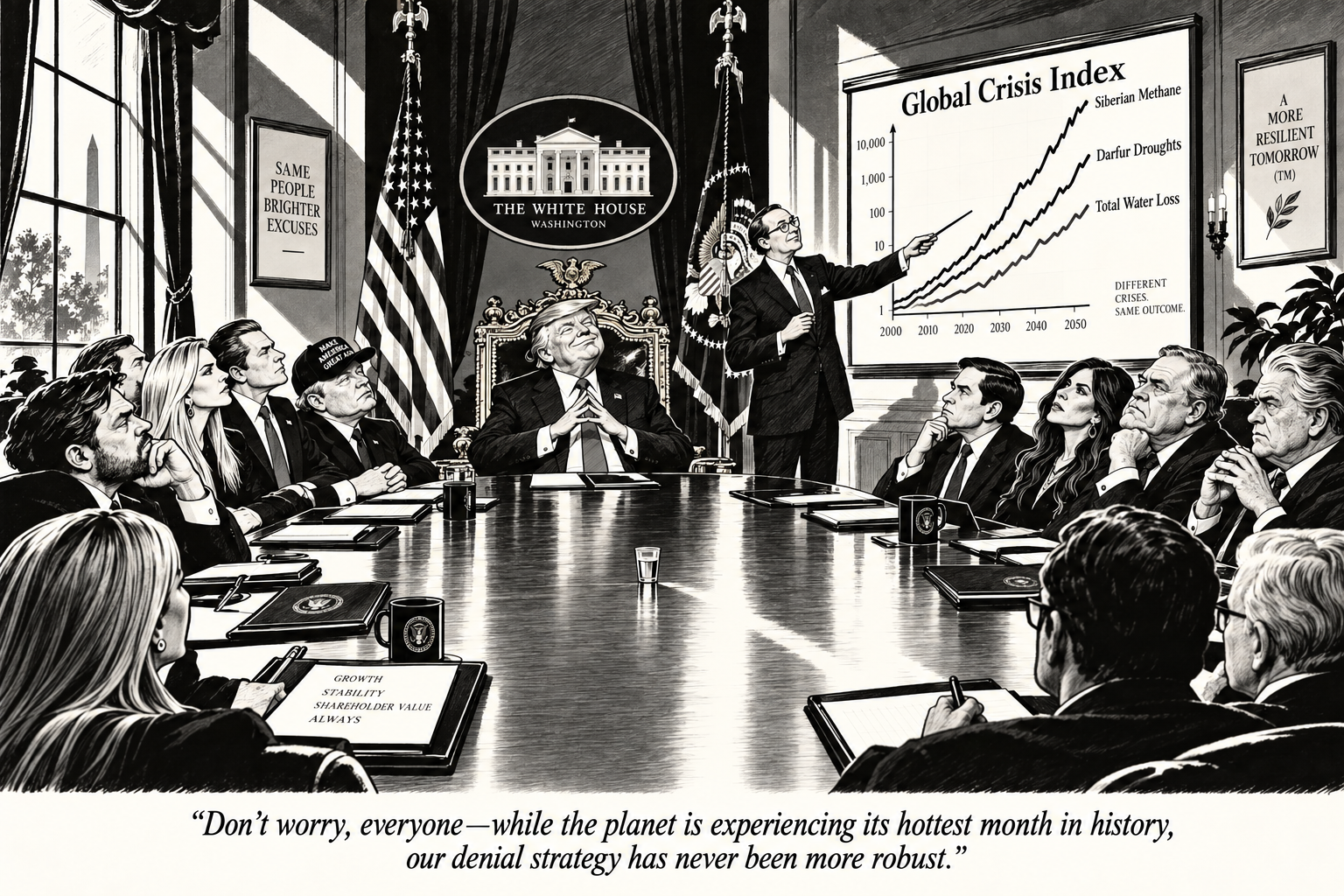
Research published in Science found that Siberian growing-season methane emissions rose about 5% per year from 2010 to 2023, more than doubling over the period. In wetter western Siberia, warming is encouraging methane production from wetlands; in hotter, drier eastern Siberia, increased wildfire is boosting emissions and further destabilizing permafrost. This gives Siberia the unique distinction of producing additional methane when conditions become:
Too wet.
and also:
Too dry.
Scientists have traditionally referred to this as a positive climate feedback.
The fossil-fuel industry prefers the term customer loyalty program.
Britain Suddenly Realizes It May Actually Need The Wasps
Britain has also reported an unsettling shortage of wasps this summer.
Wasp biologist Seirian Sumner says unusually severe heat, abrupt temperature swings and food shortages may have disrupted colonies, while some surviving wasps appear unusually small. Importantly, the evidence so far is largely observational: Britain’s national Big Wasp Survey has not yet supplied the data needed to establish exactly what happened. This has left Britons confronting an ecological truth nobody expected to confront:
Apparently we needed the bastards.
Wasps provide pest control, pollination and decomposition services, meaning the insect most famous for arriving uninvited at your picnic and attempting to crawl into your Coke was apparently performing several unpaid ecosystem jobs the entire time. Experts are now urging people not to panic.
Mostly because the wasps who normally handle panic-related crowd dispersal seem to be missing.
London Mayor Warns Climate Crisis Will Be Paid For By Shocking Group Known As “Everybody Else”
London Mayor Sadiq Khan recently described the current period as an “era of extremes,” arguing that climate denial and delay ultimately impose their costs on ordinary people rather than political leaders or fossil-fuel companies. He pointed to heatwaves, wildfires, drought, food costs and infrastructure disruption as examples of climate change migrating from environmental issue to household expense. Economists were reportedly stunned to learn that when crops fail, reservoirs shrink, roads buckle, hospitals fill and homes burn, somebody eventually receives an invoice. The encouraging news is that humanity still has several policy options available:
Reduce greenhouse-gas emissions.
Prepare infrastructure for hotter conditions.
Protect ecosystems.
Accelerate clean-energy deployment.
Adapt food and water systems.
Or continue arguing on social media about whether the thermometer has become woke.

Scientists Unveil Disturbing New Theory: All These Completely Separate Things May Be Connected Somehow
Researchers emphasize that none of these stories means every wildfire, drought or unfortunate wasp can be individually stamped MADE BY CLIMATE CHANGE.
Climate science deals in altered probabilities, long-term trends, physical mechanisms and attribution—not weather possessing a tiny membership card.
But the broad pattern is getting increasingly difficult to miss: hotter air and oceans, intensifying extremes, stressed water systems, ecological disruption and feedbacks capable of producing still more warming.
Fortunately, the human brain has developed a remarkably effective coping mechanism for complex systemic threats:
Treat every consequence as an astonishing coincidence.
Record global heat?
Coincidence.
Wildfires?
Coincidence.
Shrinking reservoirs?
Coincidence.
Methane feedback?
Coincidence.
Agricultural stress?
Coincidence.
Tiny British wasps?
Okay, that one finally seems suspicious.
Scientists say there is still time to limit future warming and its consequences.
Humanity responded that it would definitely take a look at that right after finishing this extremely important argument about whether paper straws work.