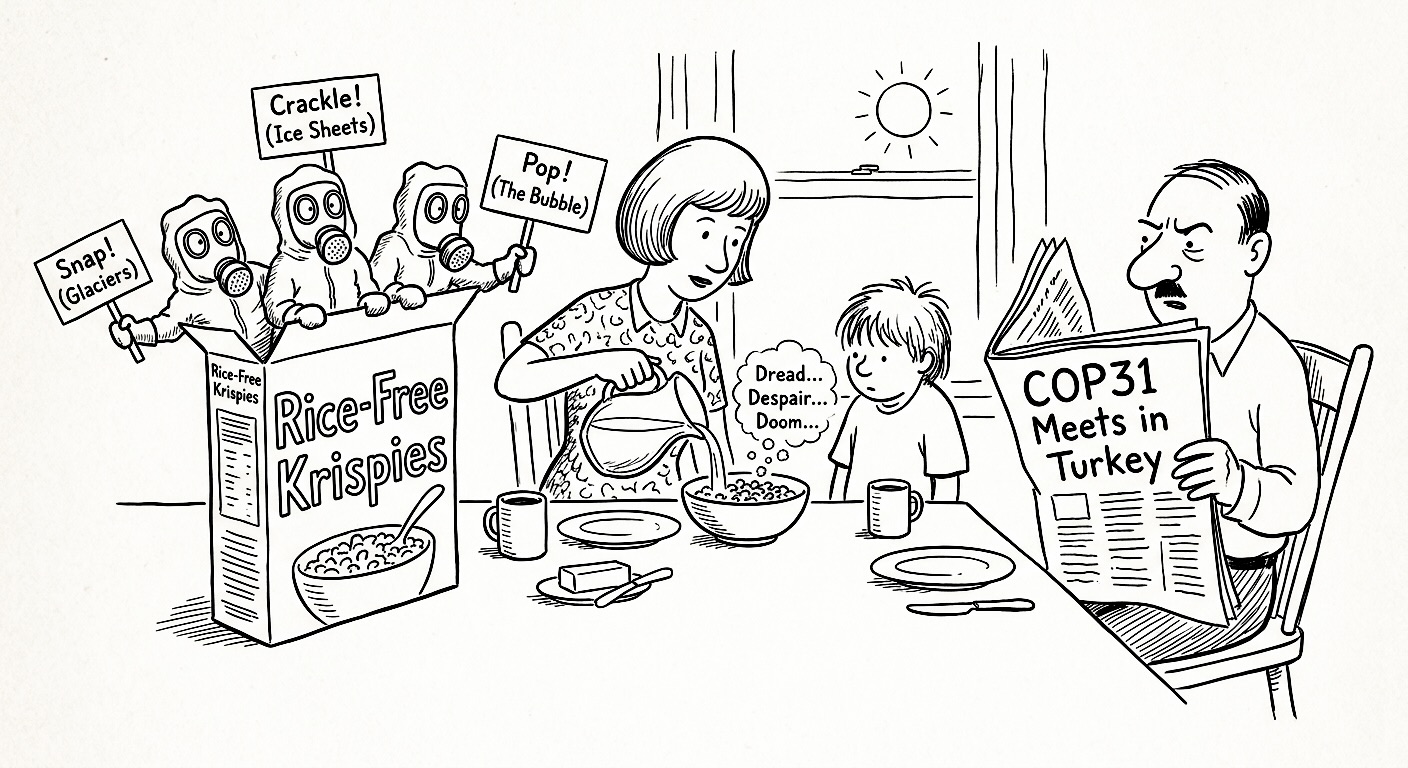
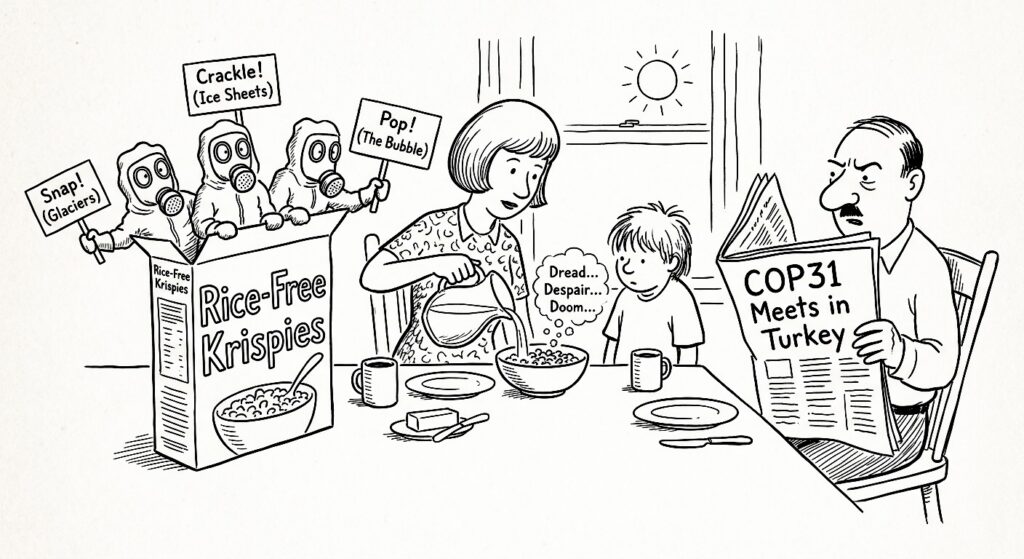
Welcome to November 2026, when the climate crisis has progressed from melting glaciers and rising sea levels to something perhaps even more disturbing to Western civilization: Rice Krispies aren’t made from actual rice grains anymore.
At least not in Europe.
According to Futurism, Kellogg’s has reformulated Rice Krispies and Coco Pops in European markets because changing weather conditions are affecting the quality and availability of rice and other grains.
Traditional rice grains have been replaced with processed ingredients including rice flour, while Coco Pops now uses a combination of rice flour and corn flour.
Technically, Rice Krispies still contain rice. It’s just been reduced to a powder and reassembled into something resembling its former self. Much like the global middle class.
Kellogg’s assures consumers that maintaining the cereals’ distinctive taste, texture, and sound remains a priority.
This is reassuring. Scientists may not know how to preserve the polar ice caps, but a multinational corporation is determined to preserve the acoustic properties of breakfast.
Presumably, Snap, Crackle, and Pop have been informed of the changes and offered retraining opportunities.
Scientists Discover the Pacific Ocean Has a New Color Scheme: Plastic Cyan
For decades, environmentalists have warned that the oceans are filling with plastic. Apparently, the oceans have decided to make the problem more visible.
A study published November 5 in Communications Earth & Environment examined satellite observations taken between 2002 and 2022 and found that parts of the North Pacific near the Great Pacific Garbage Patch have become noticeably brighter in blue and green wavelengths.
One possible explanation is the accumulation of microplastics, tiny particles that scatter sunlight and alter the water’s optical signature.
The researchers caution that the connection has not yet been conclusively established. Additional measurements are needed to determine how much of the observed change is caused by plastic rather than natural ocean processes.
Nevertheless, the potential implications are exciting.
For the first time, humanity may be able to observe its plastic pollution from space without having to launch any additional plastic into space.
The ocean, once celebrated for its deep blue beauty, may soon offer a distinctive artificial cyan tint.
Somewhere, a marketing executive is already preparing the trademark application for Pacific Garbage Patch Blue™.
Scientists Warn That Melting Ice Doesn’t Understand the Concept of a Temporary Overshoot
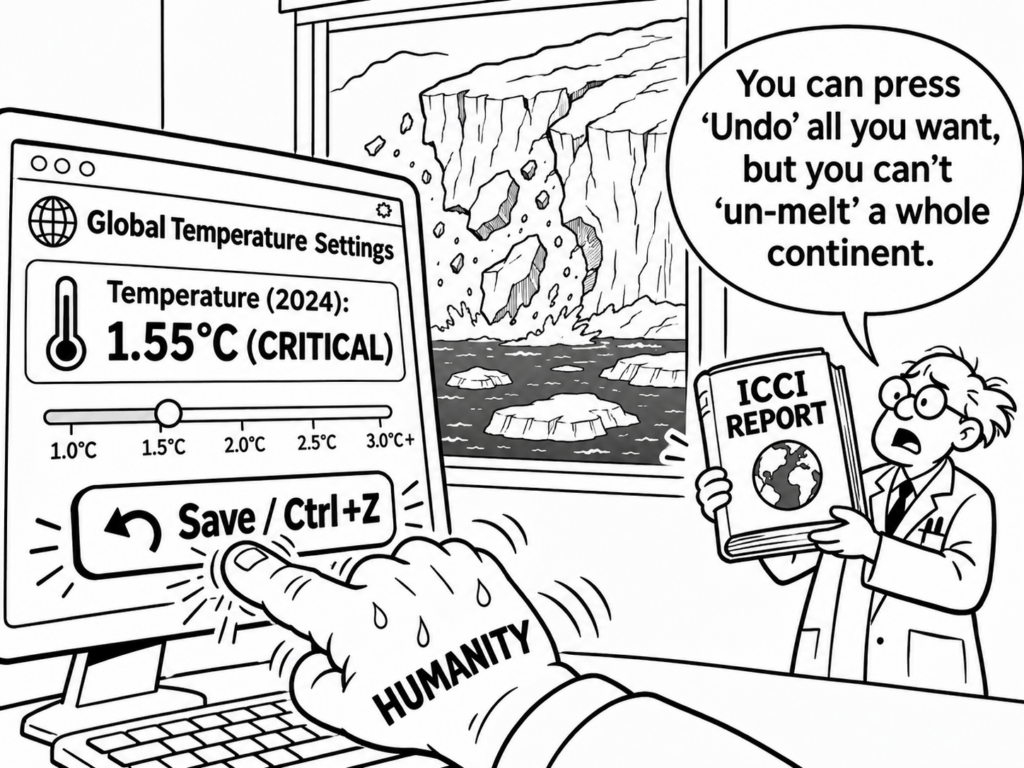
The International Cryosphere Climate Initiative, working with the UN Environment Programme, has issued another disturbing warning: allowing global temperatures to temporarily exceed the Paris Agreement’s 1.5°C warming target could cause permanent and widespread damage to glaciers, polar ice sheets, and permafrost.
The problem is that glaciers operate on geological timescales rather than political election cycles.
Even if humanity eventually reduces global temperatures, much of the ice already lost will not return for centuries or millennia.
Greenland and Antarctic ice sheets are currently losing ice at roughly six times the rate recorded during the 1990s. Researchers warn that substantial ice losses could continue even after temperatures are brought back down.
The report recommends eventually reducing long-term warming to below 1°C above preindustrial levels, ideally by 2150, to limit the worst consequences.
This represents an interesting development in international climate policy.
We have spent decades attempting to avoid exceeding 1.5°C. Scientists are now informing us that even 1.5°C may be too warm for the long-term stability of much of the world’s ice.
It’s rather like receiving a notice from your landlord informing you that the building is on fire, the fire extinguishers are inadequate, and the lease requires you to restore the premises to their original condition by the year 2150.
Antarctica Announces It Will Now Be Contributing to Global Carbon Emissions
For years, scientists have worried about Arctic permafrost releasing greenhouse gases as frozen soil warms.
Now Antarctica apparently wants to participate.
According to New Scientist, reporting on research from Antarctica’s Taylor Valley, researchers measured carbon dioxide escaping from ice-free Antarctic ground at rates approximately five and a half times higher in 2025 than in 2020.
The cause remains uncertain. Scientists suspect that changes in underground water movement and ancient carbon reservoirs may be involved, but the findings come from one region and do not establish that the entire continent is undergoing the same process.
Still, the possibility of a previously underestimated source of atmospheric carbon dioxide is troubling.
Antarctica, traditionally known for its penguins, research stations, and vast quantities of frozen water, may also be operating an unlicensed carbon-emissions facility.
The penguins have declined to comment, although several are reportedly considering relocation.
India Reports Extreme Weather on 92% of Days, Leaving the Other 8% for Administrative Paperwork
While some countries are debating the finer points of climate policy, India has been experiencing an increasingly relentless series of weather disasters.
According to the Centre for Science and Environment and Down To Earth, extreme weather struck somewhere in India on 251 of the first 273 days of 2026.
That’s 92% of all days, although it does not mean every location experienced extreme conditions simultaneously.
The consequences have been devastating.
During those nine months, extreme weather events were associated with 3,220 deaths, damage to 4.25 million hectares of crops, the destruction of more than 128,000 homes, and the deaths of over 47,000 livestock animals.
Across the five-year period from 2022 through September 2026, the report documented more than 16,000 deaths and damage to at least 20.6 million hectares of agricultural land.
Those figures are not satire.
The report’s findings suggest that for a country of more than a billion people, extreme weather has become an almost daily national occurrence.
On the positive side, climate-related disasters should eventually eliminate the need for weather forecasts. The forecast will simply read: Yes.
COP31: World Leaders Convene to Discuss the End of the World, Minus the United States
And so we arrive at COP31, which opened November 9 in Antalya, Turkey.
Delegates have gathered to discuss reducing greenhouse gas emissions, financing adaptation, expanding renewable energy, and implementing promises made at previous climate conferences.
This year’s negotiations take place against the backdrop of an energy crisis caused by the war in Iran and the effective closure of the Strait of Hormuz, disrupting global oil supplies and raising prices for fuel, fertilizers, and other petroleum-dependent products.
The irony is considerable.
A war disrupting access to fossil fuels has helped demonstrate the strategic and economic advantages of reducing dependence on fossil fuels.
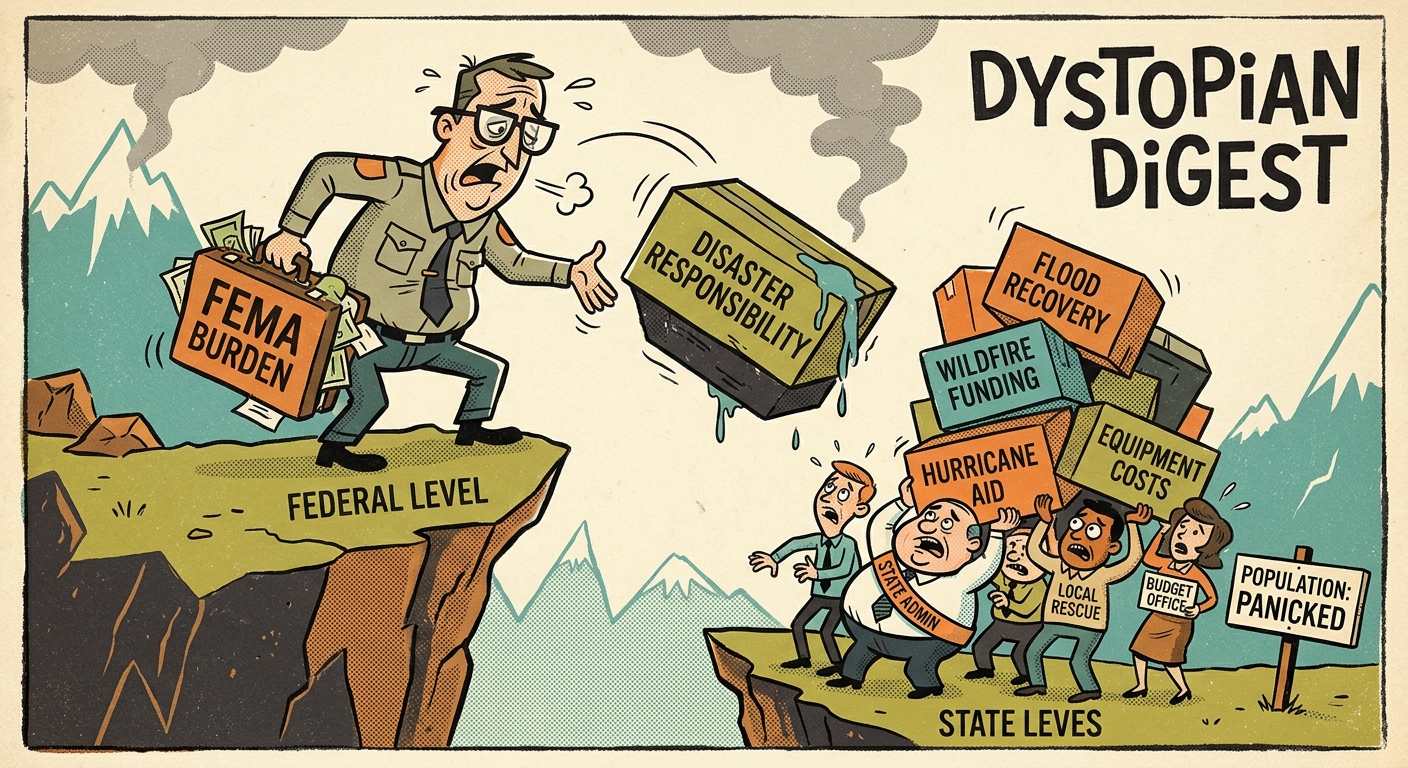
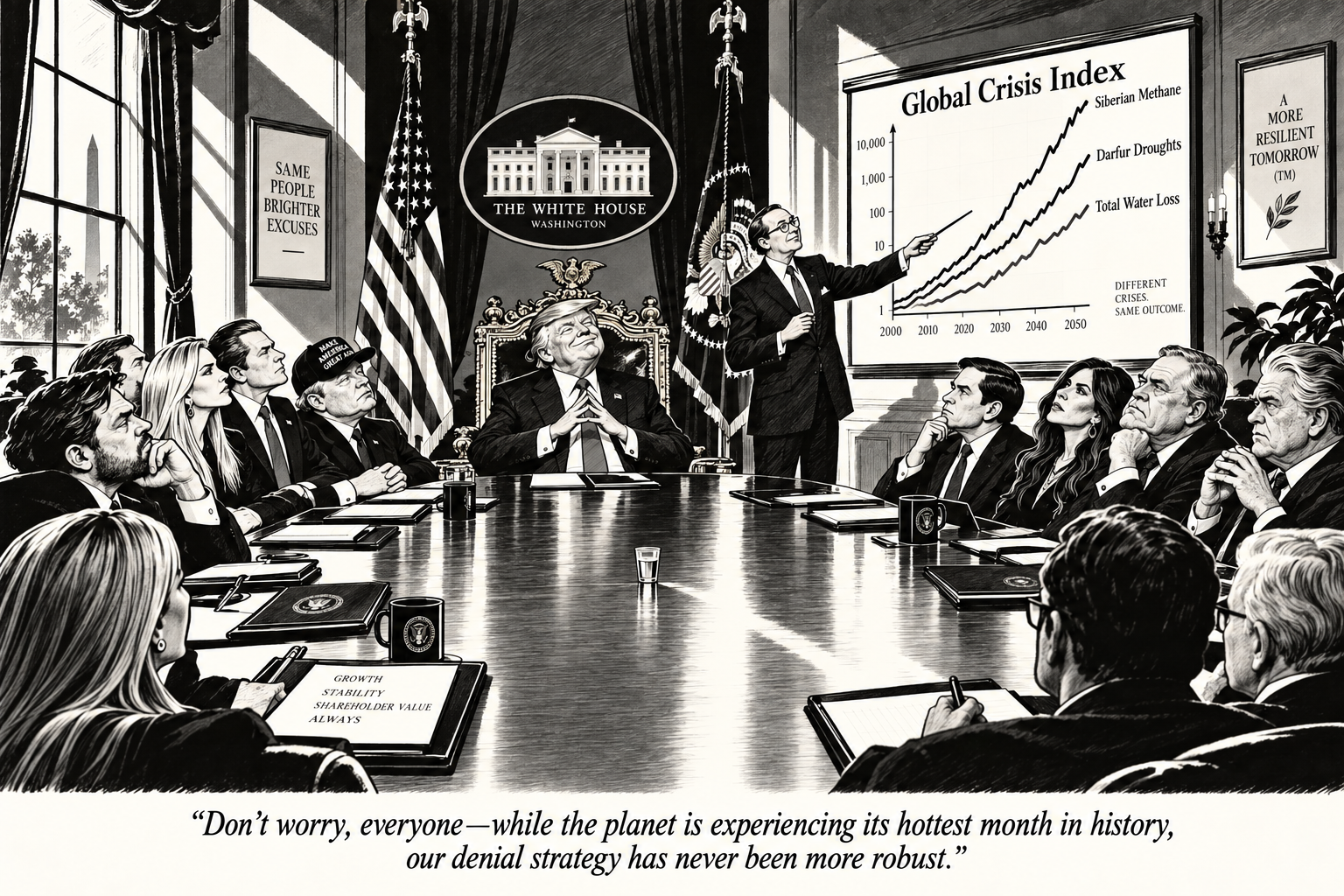
Meanwhile, the Trump administration has chosen not to send an official American delegation to the summit. Some U.S. lawmakers and other American representatives are attending independently, but the federal government will not be participating in the formal diplomatic festivities.
This may simplify negotiations considerably. It is difficult to obstruct an international agreement when you haven’t shown up, although governments have demonstrated remarkable ingenuity in this area.
Scientists increasingly expect the world to exceed the Paris Agreement’s 1.5°C long-term warming threshold.
The resulting question is no longer simply whether the planet can avoid crossing that limit, but how far above it temperatures will climb, how long they will remain there, and how much irreversible damage will occur before they fall again.
Fortunately, delegates have two weeks to discuss these questions.
The glaciers, which have not been invited, will continue conducting their own negotiations with gravity.
There is something almost impressive about humanity’s ability to absorb an endless sequence of environmental warnings and continue conducting business as usual. The oceans may be acquiring the spectral signature of plastic. Antarctic soil may be releasing unexpected carbon dioxide. India’s extreme weather disasters are becoming a near-daily reality. Polar ice sheets are responding to warming faster than governments are responding to scientists.
And somewhere in a corporate laboratory, highly trained food scientists are working to ensure that a reformulated breakfast cereal makes the correct popping sound.