The people most eager to rule us may be the last people we should trust. Unfortunately, the people we’d rather trust have better things to do.
In Book I of The Republic (347 BCE), Socrates offered an observation about political leadership that remains relevant more than two millennia later: decent people don’t seek power for money or glory. They generally have to be persuaded, pressured, or frightened into taking the job.
Their incentive? Avoiding the even worse punishment of being governed by someone inferior to themselves.
Socrates apparently believed that the best leaders would consider governing a burdensome civic obligation rather than a magnificent opportunity for personal advancement. Which suggests he never met anyone running for president of the United States.
Today, political ambition isn’t merely tolerated. It’s practically a prerequisite. Candidates spend years raising money, building organizations, courting wealthy donors, cultivating media personalities, and assuring millions of strangers that they alone possess the wisdom, character, and divine authorization to run the country.
In 2024, American presidential candidates collectively spent approximately $1.8 billion, according to the Federal Election Commission. That’s an impressive amount of money to spend persuading people that you have absolutely no interest in power except to serve them.
Democracy: Now With Professional Image Enhancement
The higher a candidate climbs on the political ladder, the more expensive the packaging becomes.
Political consultants refine personalities, speechwriters manufacture sincerity, public relations firms repair reputations, and social media specialists transform carefully choreographed performances into supposedly spontaneous expressions of authenticity.
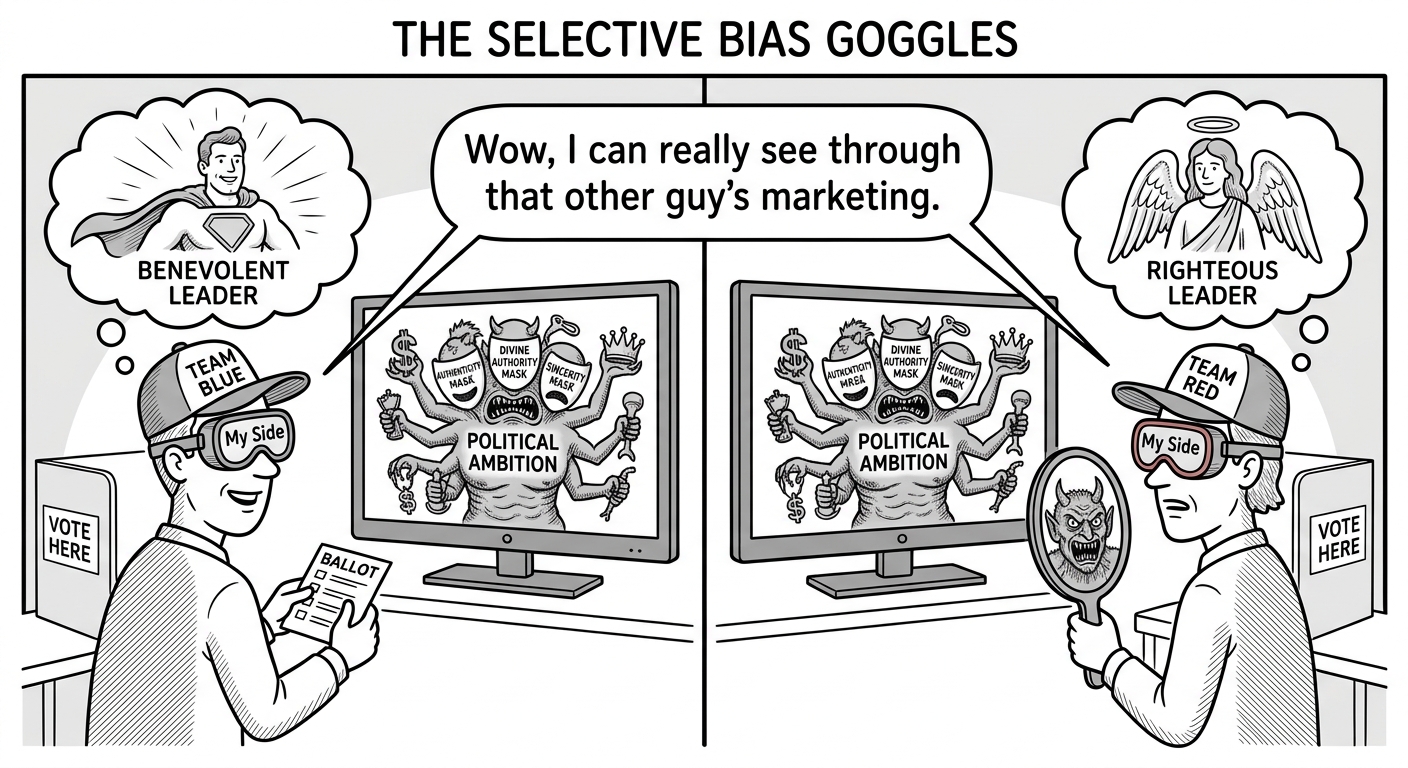
By the time a presidential candidate reaches the ballot, voters aren’t necessarily choosing between two human beings. They’re choosing between two multimillion-dollar marketing campaigns, each promising salvation while warning that the other will bring about the collapse of civilization.
Naturally, both sides believe they can see through the deception.
Just not their own side’s.
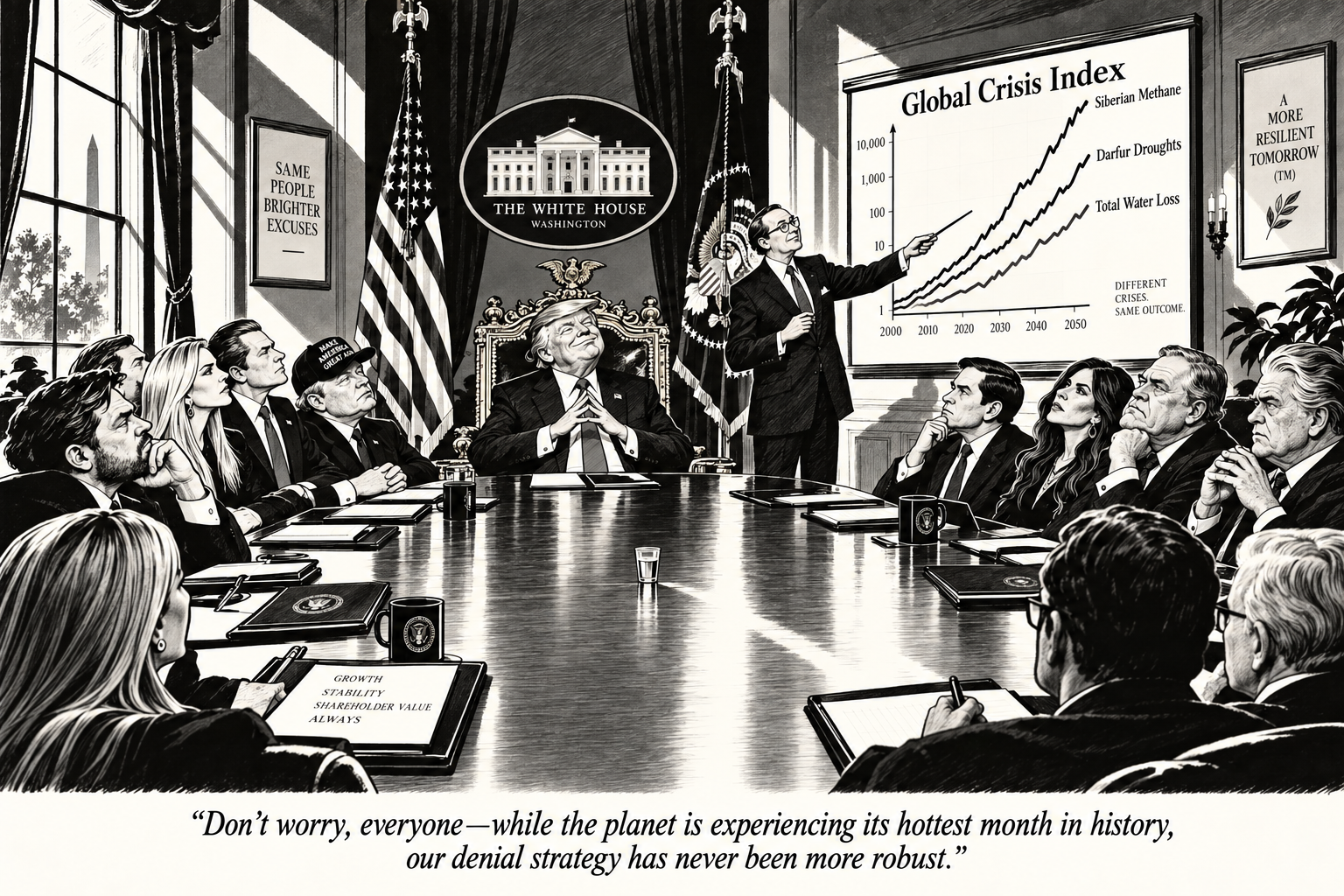
Donald Trump’s admirers may interpret his combative personality, displays of wealth, and disregard for conventional political decorum as refreshing honesty or evidence of strength. Critics interpret many of those same characteristics as reasons for alarm.
Bill Clinton’s supporters often defended his political triangulation and minimized the significance of his sexual misconduct scandal, including his affair with a White House intern. His opponents regarded those matters as deeply revealing about his character.
Similar arguments surround figures as politically diverse as Benjamin Netanyahu, Joe Biden, Rashida Tlaib, Zohran Mamdani, and Volodymyr Zelensky. The circumstances and allegations differ enormously, but supporters and detractors continually dispute what particular behavior reveals about a leader’s underlying character.
In American politics, misconduct can be anything from an unforgivable moral catastrophe to an unfortunate personal quirk, depending on whose campaign bumper sticker is attached to the perpetrator. Political scientists call aspects of this motivated reasoning. Ordinary people might call it hypocrisy. Campaign strategists call it an opportunity.
To be fair, partisan loyalty isn’t absolute. Research suggests voters can penalize even their preferred politicians when misconduct is sufficiently clear. Unfortunately, this still leaves plenty of room for disagreement about what counts as clear evidence, actual misconduct, or a Tuesday.
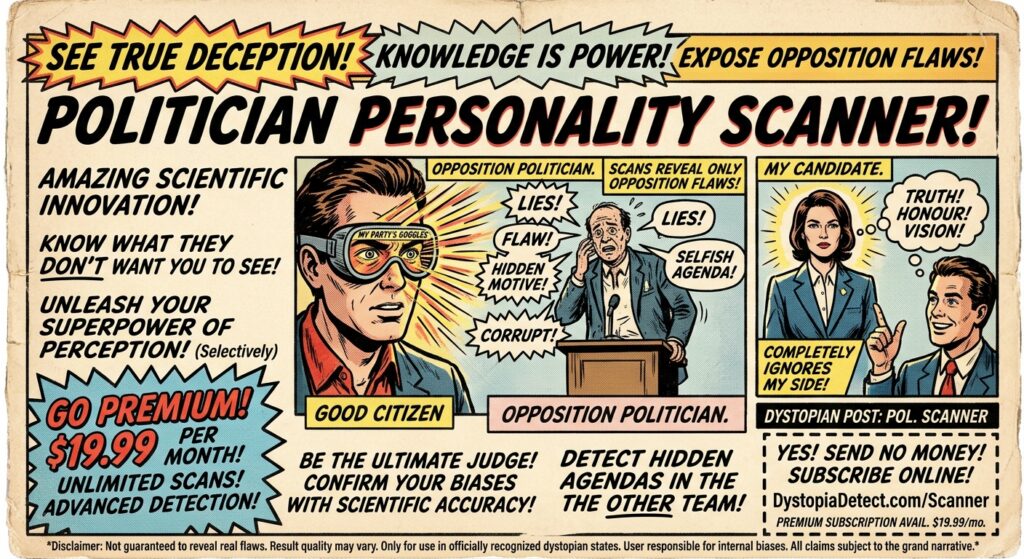
Introducing the Politician Personality Scanner™
Imagine that scientists finally invent a device capable of providing an accurate, objective psychological profile of any candidate for public office.
Forget campaign advertisements, carefully selected family photographs, flag-draped speeches, and the heroic biography in which every childhood lemonade stand was apparently a rehearsal for saving democracy. Simply place the candidate inside the machine. Within minutes, it produces reliable measurements of:
- Intelligence and reasoning ability
- Self-control and emotional stability
- Honesty and sincerity
- Empathy and altruism
- Desire for wealth, status, recognition, and power
- Willingness to sacrifice personal advantage for the public good
Imagine discovering that your favorite political champion genuinely believes in the policies you support but is also a vain, manipulative opportunist who regards the electorate as livestock with voting privileges.
Would you reconsider your support?
Or would you conclude that a little narcissism is a reasonable price to pay for affordable healthcare, lower taxes, reproductive rights, religious freedom, military strength, or whatever issue brought you to the polls?
Now imagine the scanner discovers that your political opponent possesses extraordinary intelligence, compassion, honesty, and self-restraint.
Unfortunately, this admirable specimen of humanity also supports policies you consider economically disastrous, morally offensive, or potentially civilization-ending. Would you vote for this exceptionally decent individual?
Of course, some voters would change their minds. Others would continue prioritizing policy over personality. Still others would insist the scanner had been programmed by George Soros, Elon Musk, the CIA, or possibly the ghost of Karl Marx. The manufacturer would issue a recall after discovering that the machine’s most commercially unpopular feature was its accuracy.
Unfortunately, Intelligence Doesn’t Cure Ideology
Even if we could identify the smartest, kindest, most principled people in the country and somehow force them to serve in government, we would still face another problem.
They wouldn’t necessarily agree on anything.
Two equally intelligent, compassionate, and honest individuals can reach radically different political conclusions because they begin with different assumptions about human nature, justice, economics, religion, national identity, or the proper responsibilities of government.
One might regard economic inequality as evidence of a fundamentally unjust system. Another might consider some inequality an unavoidable consequence of individual freedom.
One might believe that national security requires overwhelming military superiority. Another might believe that the pursuit of such superiority makes everyone less secure.
Both could be sincere. Both could reason carefully from their premises. And both might possess admirable qualities that would make them excellent neighbors but infuriating political opponents.
Logic can help us establish whether our arguments are consistent and our evidence is sound. It cannot automatically resolve conflicts between competing moral priorities.
Compassion doesn’t solve the problem, either. Compassion for whom? The unborn child or the pregnant woman? The taxpayer or the welfare recipient? The factory worker or the people living downwind of the factory? The nation’s citizens or the desperate refugees outside its borders?
Our political disagreements aren’t always failures of intelligence or character. Sometimes they arise because we genuinely disagree about what a good society should look like.
Unfortunately, political campaigns prefer the simpler explanation: the opposition is stupid, evil, or both. It’s easier to raise campaign contributions that way.
The Survival of the Most Ambitious
Political power inevitably attracts people motivated to acquire it.
Some are sincerely interested in improving society. Others enjoy prestige, influence, wealth, or the exhilarating experience of giving orders to people who must pretend to enjoy receiving them.
Most probably fall somewhere in between.
Political systems attempt to restrain these ambitions through elections, laws, institutions, checks and balances, and the occasional criminal prosecution. Power shifts as coalitions form and collapse. Public opinion changes. Today’s political genius becomes tomorrow’s embarrassing historical footnote, usually after publishing a memoir explaining why everyone else was responsible.
In theory, these competing ambitions and interests can produce compromise, stability, and progress.
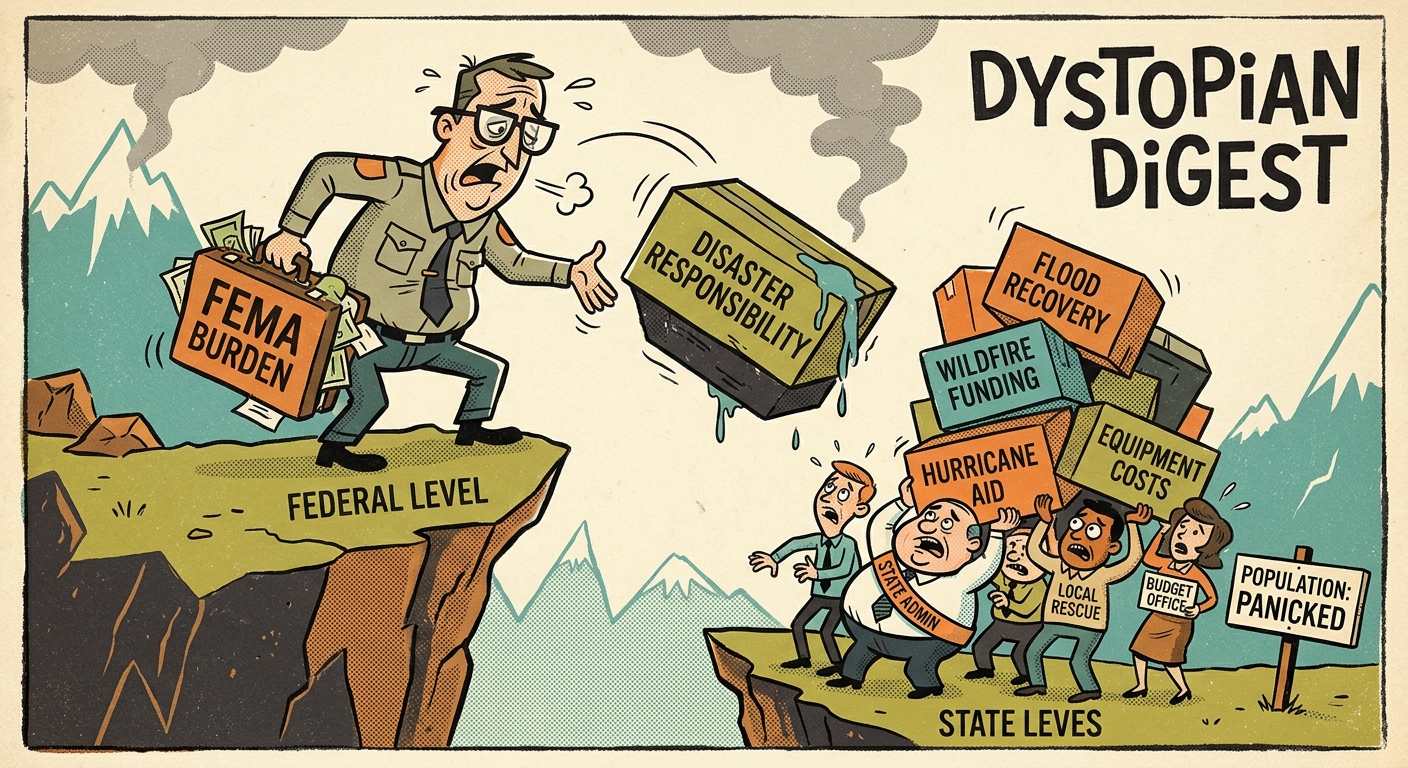
In practice, they can also produce decades of paralysis while the problems requiring collective action continue developing without consulting the electoral calendar.
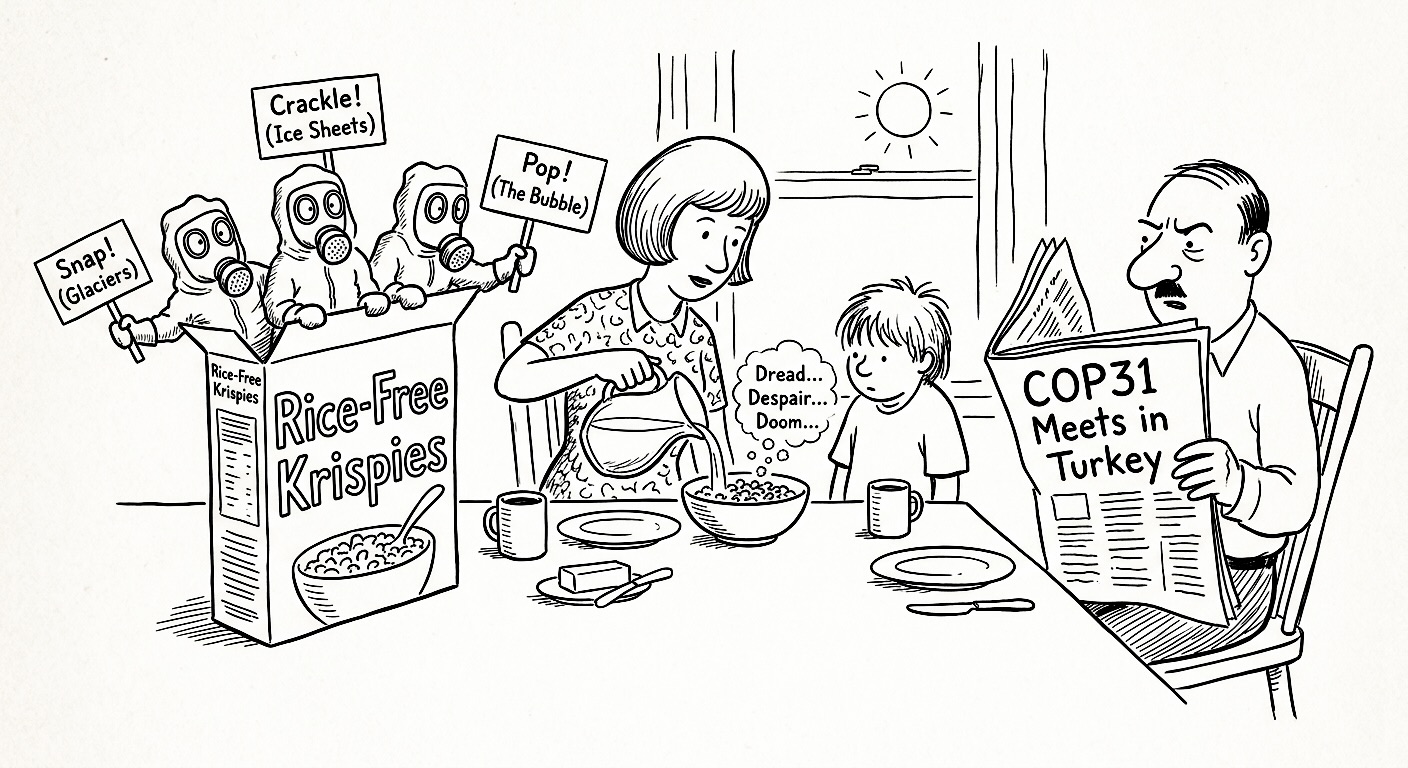
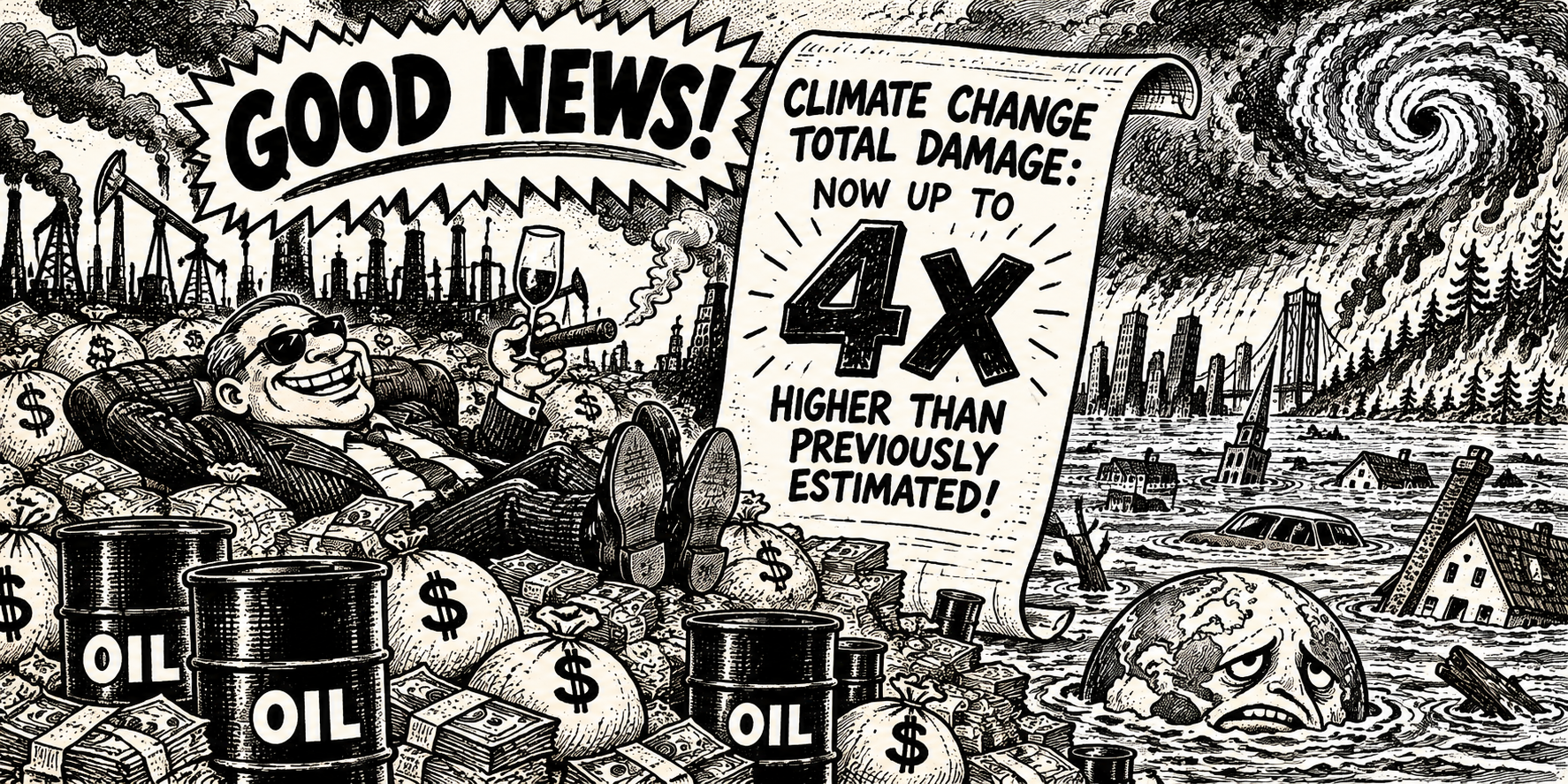
Climate change, pandemics, armed conflict, hunger, ecological collapse, and emerging technological dangers aren’t especially interested in whether their proposed solutions appeal to suburban swing voters.
Carbon dioxide doesn’t negotiate with Congress. Viruses don’t check party registration. Famine doesn’t postpone itself until the next election.
Meanwhile, we debate whether a proposed remedy would give the other side a political victory.
By the time some problems become impossible to ignore, they may also be considerably more difficult—or impossible—to reverse. At that point, bipartisan agreement may finally become possible.
Unfortunately, the agreement may simply be that somebody should have done something twenty years earlier.
Socrates Gets the Last Laugh
Perhaps Socrates identified the central paradox of political leadership: the qualities that make people eager to acquire power aren’t necessarily the qualities that make them trustworthy with it.
But his observation raises an even more uncomfortable possibility.
What if political leadership isn’t primarily a problem of selecting sufficiently virtuous individuals?
What if even virtuous leaders remain prisoners of incompatible worldviews, institutional incentives, competing constituencies, and an electorate that demands honesty while rewarding reassuring fiction?
A truly decent ruler might possess the wisdom to recognize these limitations.
A truly ambitious ruler might promise to eliminate them by the end of the first hundred days.
And the rest of us will continue choosing between candidates while assuring ourselves that the future of civilization depends on making the correct choice.
Socrates thought the greatest punishment for refusing to govern was being governed by someone worse. Modern democracy has improved on this arrangement. Now we get to spend billions of dollars choosing who that person might be, spend 4 years arguing about whether we made a terrible mistake, and then do it all over again.
Assuming, of course, that there’s still a functioning civilization in which to hold the next election.
Dystopian Digest: Reporting on tomorrow’s disasters while there’s still electricity.
Related reading: Plato’s Republic, Book I, 347b–d | Research on partisan responses to political scandals