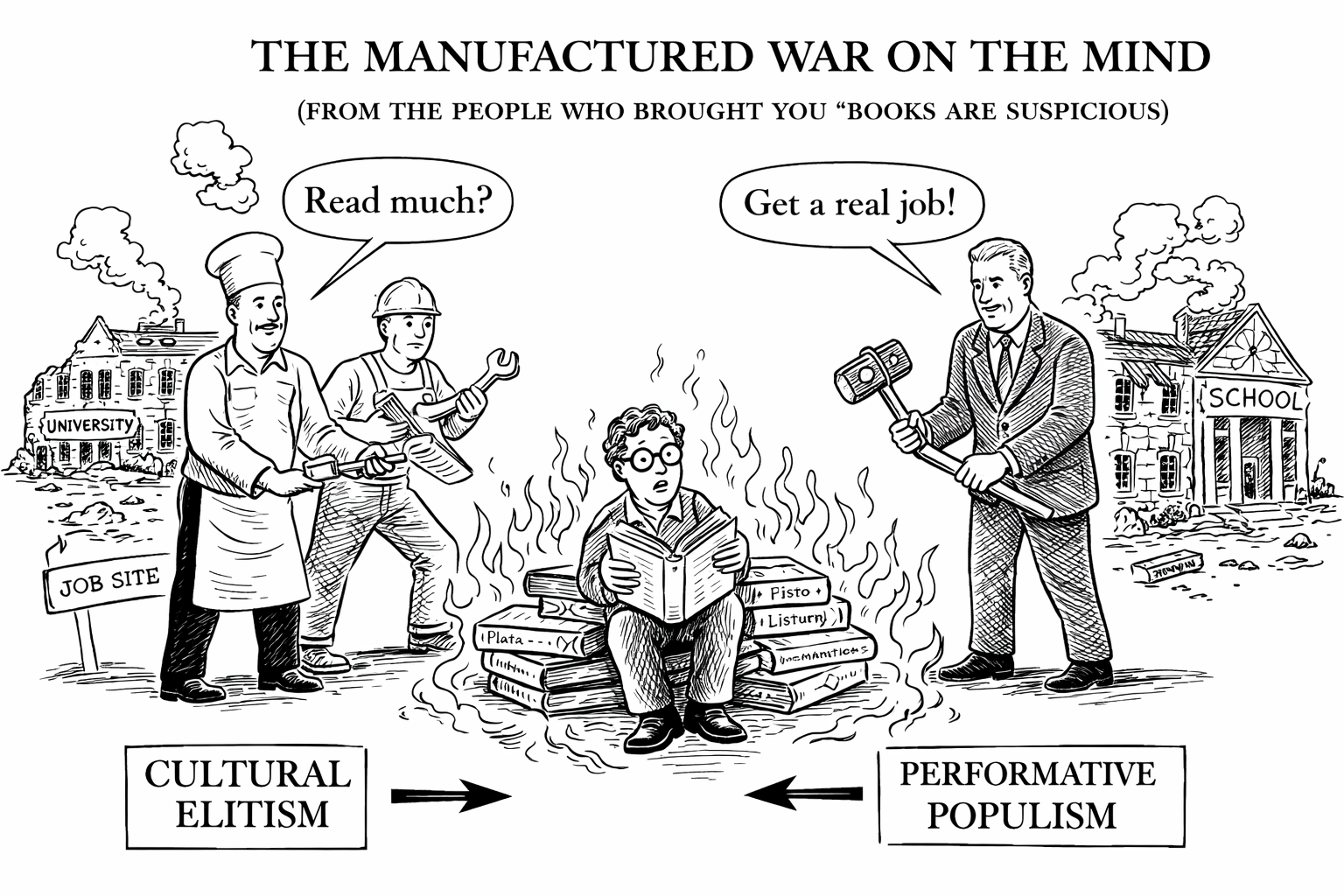
SHOCKING: Billionaires Discovered Long Ago That Uneducated, Misinformed People Are Easier to Govern The one weird trick elites use to stay in power: convince the working class that learning is for snobs!!!
“I Love the Poorly Educated!”
– Donald Trump, 2016, saying the quiet part directly into a microphone at full volume
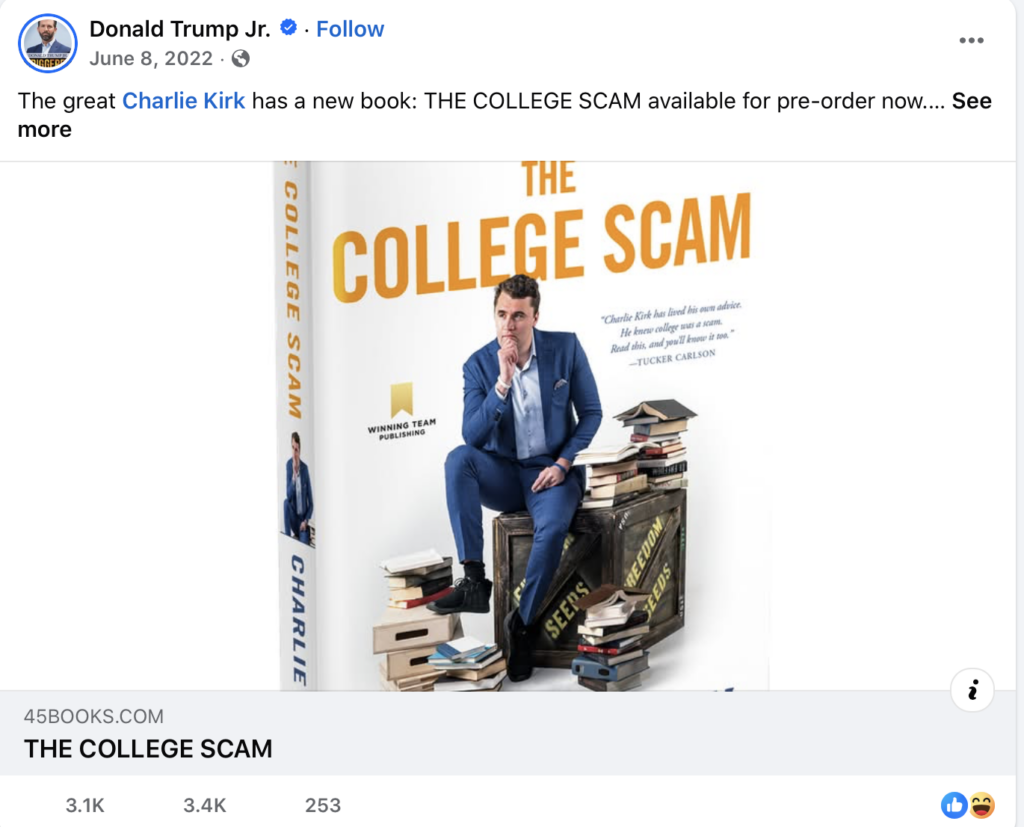
Let’s be clear about something: you will not find a single Fortune 500 CEO steering his children toward HVAC certification instead of Harvard. Not one (unless they’re REALLY mad at their kid.) The Ivy League will be fine. Or possibly Hillsdale. It’s just the other people — working-class kids, first-generation students, international scholars — who are being politely priced or squeezed out of the old boy network and handed a pamphlet about “learning a trade” instead.
And yet somehow, higher education is the elitist institution here.
Remarkable.
Thinking—America’s Most Dangerous Hobby
Once upon a time, knowledge was power.
Now it’s more like a felony-adjacent lifestyle choice.
Because here’s the problem:
If everyone knows things, then fewer things can be hidden.
And if fewer things are hidden…well…how is anyone supposed to run a proper society based on fine print?
At some point in the last forty years, someone on the far right pondered “what if we rebranded ‘learning’ as ‘brainwashing’?” Indoctrination became the preferred label for: philosophy, history, evolution, vaccination, and the general act of encountering an idea you didn’t already have.
This branding was extremely useful for people who needed a reason to gut public university funding without admitting they preferred a workforce too financially desperate to ask questions.
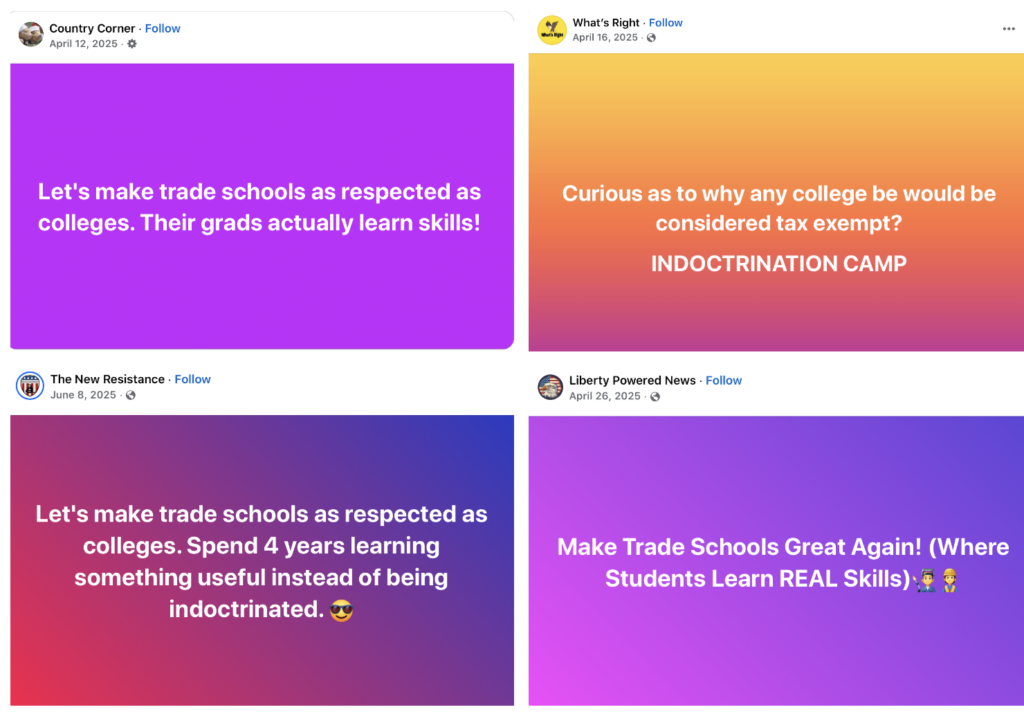
The message, distributed efficiently through talk radio, Fox News, MAGA influencers on a slow Tuesday, and what experts diplomatically call “inauthentic Facebook accounts,” went something like this: College makes your kids weird. It’s expensive. It’s liberal. Real Americans use their hands.
Meanwhile, in Beijing and Moscow, analysts reportedly cannot believe their luck.
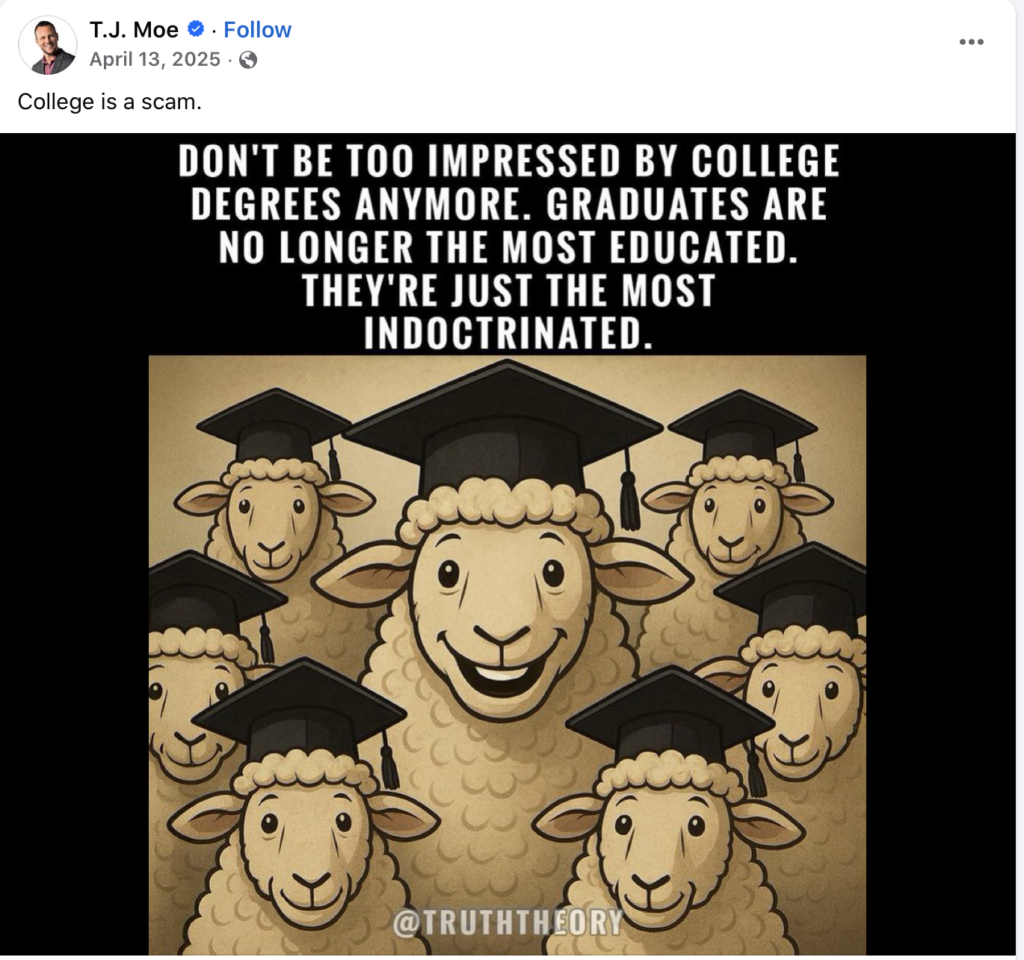
“Indoctrination”—Now With 30% More Marketing
And just like that, higher education became:
- Not a public good
- Not a pathway to opportunity
- But a very elaborate scheme to make you read Moby-Dick and feel feelings about whales
Meanwhile, public funding quietly shrank, universities raised tuition, and suddenly “Don’t go to college” started sounding less like rebellion and more like…financial planning. Boomers would tut-tut and recall paying for college with a summer job—back when tuition hadn’t climbed more than 10× since the 1970s, leaving inflation wheezing somewhere in the dust.
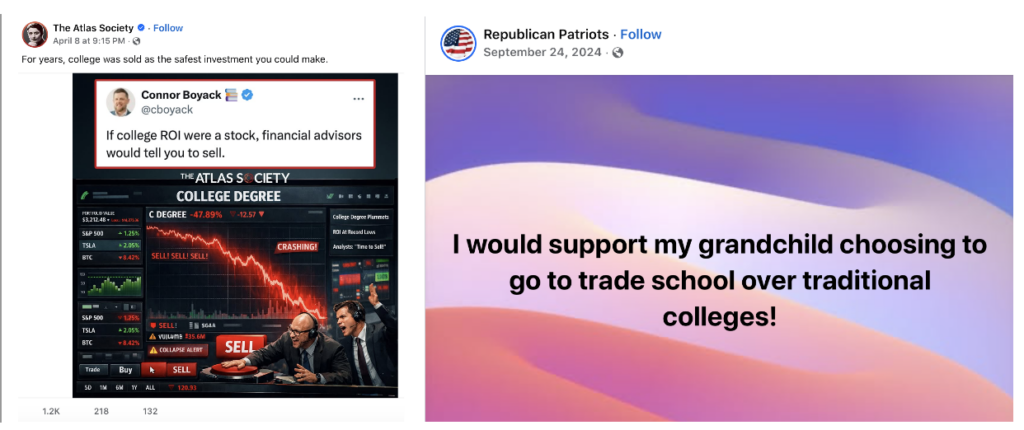
The Trades vs. College Cage Match: Nobody Bought a Ticket But Everyone’s Fighting
Here is a fun fact that the current discourse would prefer you not dwell on: there is no actual conflict between learning a trade and reading a book.
For a brief, shining moment in American history — when public universities were affordable and community colleges were genuinely funded — a person could become an electrician and take a course on the Roman Empire. You could wire a house on Monday and argue about Nietzsche on Thursday. You could fix the pipes and read the fine print on the contract you were about to sign.
This was considered threatening by people who profit from the fine print.
And so, a two-front war was launched:
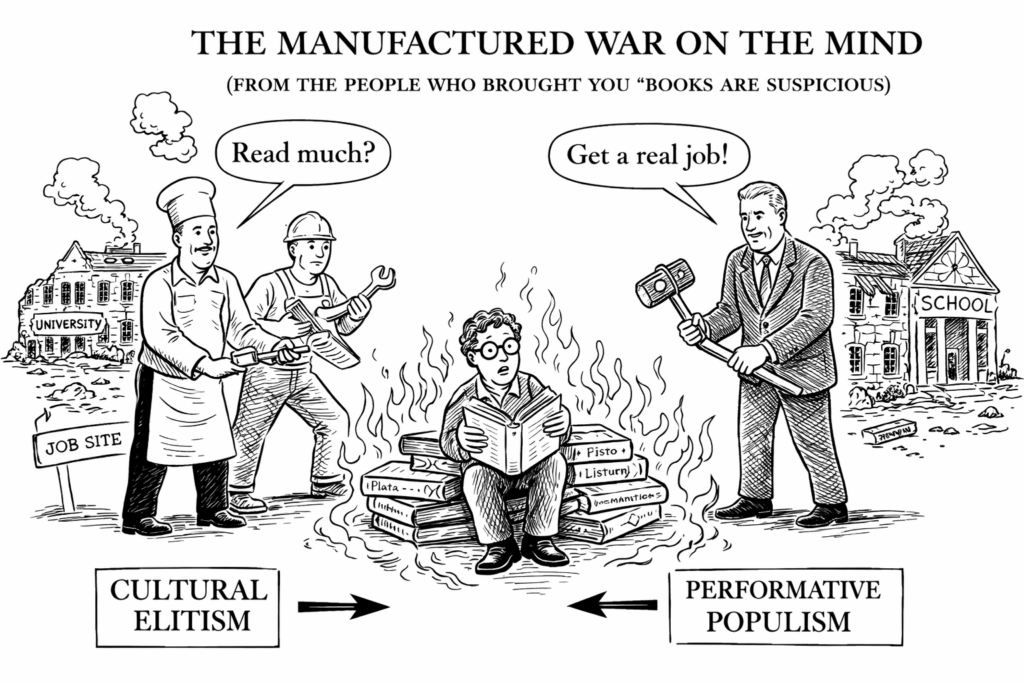
Front One: The Coastal Condescension Problem. Certain liberal institutions did, in fact, treat the trades like a consolation prize — a path for people who didn’t quite make it. This was insulting, economically illiterate, and politically catastrophic. Gold star for effort, absolute disaster in execution.
Front Two: The Fake Populism Offensive. Right-wing leadership, having correctly identified that working-class resentment was a powerful fuel, began posing as champions of the job site while systematically defunding the schools that would have given those same workers the analytical tools to notice what was happening to them.
The result: plumbers and professors yelling at each other on the internet while the people who own both the plumbing companies and the universities count their money in a quiet room.
The trades vs. college debate, as one observer put it, is theatrical wrestling. Elites don’t care if you’re a welder or a sociology major, as long as you’re too busy fighting each other to notice they’ve turned the American Dream into a subscription service.
The Infrastructure of Ignorance: A Growth Industry
The defunding of public education was only one tool in the kit. The full portfolio includes:
- Consolidating media: Talk radio, local TV stations, cable news — systematically acquired and ideologically aligned over three decades.
- Twitter/X: Purchased by the world’s richest man and, critics observe, optimized for outrage, conspiracy, and the specific kind of confidence that comes from never being fact-checked.
- The Washington Post: Owned by the founder of Amazon, which is a sentence that would have sounded like a thriller novel premise in 1995.
The goal in each case is identical: control the information architecture, and you don’t need to ban books. People will do it themselves.
What Happens When You Actually Bomb the Universities
If the defunding strategy is the slow version of this project, there is also a fast version.
In the weeks following the collapse of the Iran ceasefire, U.S. and Israeli strikes reportedly destroyed more than 30 Iranian universities and 763 schools. Among them: Sharif University of Technology — Iran’s MIT, now rubble.
Gaza’s universities have been similarly targeted. Systematically.
This is not incidental. It is, as historians of every prior empire could tell you, the point. Universities are where a society thinks about itself — where it argues about its past, imagines its future, and produces the people who will write the contracts, design the infrastructure, and decide who gets power next. Destroy that, and you don’t just kill people. You amputate the future.
Meanwhile, At Home: The Slow Version
The American approach is gentler, but the math is the same.
In New York City, homelessness among school-age children is rising — and most of those children are struggling to make it to school at all. In Los Angeles County, the numbers are similar and the resources are not. Nationally: when children cannot afford stable housing during K-12, the conversation about whether college is “worth it” becomes somewhat academic.
And the polling reflects exactly this logic. In 2010, 75% of Americans rated college as “very important.” By 2019 it was 53% — and still falling. The Gallup poll last year had the percentage of Americans saying college is “very important” down to 35% . The percentage who call it “not too important” has more than doubled since then.
This is being reported as a shift in values.
It is, in fact, a shift in math.
The Good News (Such As It Is)
The con only works if nobody notices it’s a con.
A plumber who can read a union contract is dangerous. A welder who understands the history of labor organizing is dangerous. A nurse who took one philosophy class and now asks “according to whom?” when a hospital administrator presents a policy is extremely dangerous.
This is why they’re trying to make sure you can only do one thing at a time — fix the thing, or understand the thing, but not both.
The move, if there is one, is embarrassingly simple: notice the wrestling match is staged, and walk out of the arena together.
Both the job site and the lecture hall are being defunded by the same people. The electrician and the English major are being played against each other by individuals who made sure their own children got both an education and a trade, wrapped in a legacy admissions package at a school that will be fine regardless of what happens to public funding.
They’re not worried about indoctrination.
They’re worried about you figuring that out.
SHARE THIS ARTICLE with someone who was told that Making American Universities Affordable Again was elitist. SUBSCRIBE for more content your algorithm was hoping you wouldn’t see. And for the love of God, check if your local library still has funding.

This is a coordinated “Brute Force Spam Campaign.”
don’t be the person who presses the red button.
Sgt. Slaughter has a broken “Steam-O-Matic” steam cabinet so he calls upon our favorite plumbers to fix it. Also guest-starring Joseph Griffo as mini Mario.
Hammaley Baebbaley Zibbaley Bubbalè, Hammaley Baebbaley Zibbaley Bop
Top Democrat Privately Whips Votes to Help Trump Spy on You
Love Doll — Informative insights on acquiring a silicone Dutch wife from a privileged website. https://www.melaniafilm.co.uk/